
Ever been drawn to new products in a store window while shopping, wanting to know more but unable to find a salesperson?
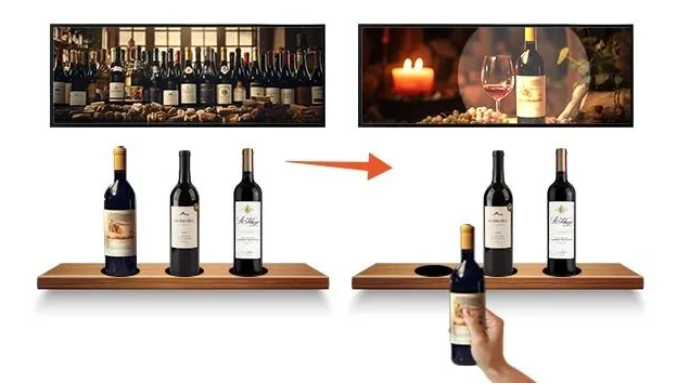
Now, Betvis’s Pick-to-Play Advertising Player” completely revolutionizes traditional marketing — when users pick up a product, the screen automatically plays its exclusive introduction; when they put the product down, the content switches seamlessly. This makes interaction more intuitive and consumption more efficient!
How Well Does “Pick-to-Play” Understand Users?
No need to scan QR codes or download apps. Users only need to place the product in the advertising player’s sensing area (or pick up the mounted sample), and the system instantly triggers the corresponding video/graphics.
Precise Reach, Doubled Conversion Rate
Traditional advertising uses a “wide net” approach, but the Pick-to-Play Advertising Player only pushes content to users with clear interest — anyone who takes the initiative to pick up a product is a potential buyer!
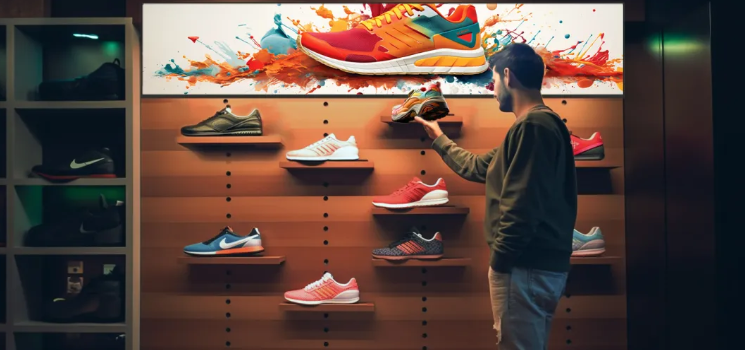
Why Must Merchants Choose the “Pick-to-Play Advertising Player”?
✅ Reduce Customer Acquisition Costs: No need to hire high-salary shopping guides. The device “stands guard” 24/7, providing precise services to every potential customer.
✅ Enhance User Stickiness: Interactive experiences encourage users to actively learn about products, creating a memory that is 3 times stronger than traditional advertising.
✅ Flexible Customization: Supports multiple content formats including videos, graphics, and live replay, adapting to the needs of different industries (cosmetics, digital products, clothing, food, etc.).
Case
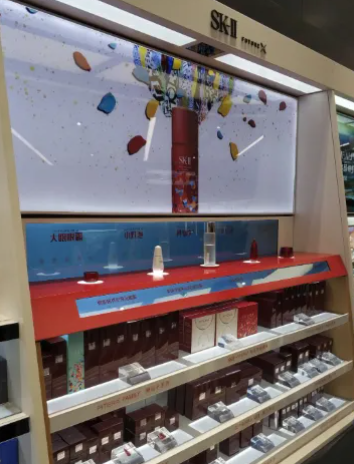
Betvis provided a solution for SK-II shelves in Sephora stores in Shanghai — combining smart bar screens with pick-to-play functionality. Equipped with “pick-to-play” (content triggered by close-range sensing), consumers can pick up a product and immediately watch videos highlighting the key features of the corresponding essence or product.
Betvis “Pick-to-Play Advertising Player” adopts a “user-initiated trigger” model, transforming marketing from “push” to “pull”. It not only meets consumers’ immediate needs but also helps merchants accurately capture traffic — this is the right way to approach future offline marketing!

